ChatGPT Reference Image Prompts: A Designer's Guide

I've been using ChatGPT reference image prompts for about three months now. And honestly, it changed the first hour of every client project. Before this, I'd spend 30 to 45 minutes scraping Pinterest and Behance, trying to describe a brand vibe in words that the model would interpret completely differently. Now I just upload the references. The difference in output quality is not subtle.
ChatGPT's image generator accepts multiple reference images alongside your prompt. Most designers still don't know this. You're not limited to text description anymore, and that changes everything about how you prompt.
Why Reference Images Change the Output
When you type a prompt without a reference, you're hoping the model interprets your words the way you intended. Sometimes it does. Mostly it doesn't.
Adding a reference gives the model visual anchor points: color temperature, composition style, shape language, the overall aesthetic register. Your prompt becomes a direction. The reference becomes a constraint. And those two things together produce something far more specific than either one alone.
Sound familiar? I tested this on a real project. A client needed logo concepts for a boutique hotel: clean, architectural, a bit understated. My text-only prompts kept producing something generic. Once I uploaded a reference image from their existing stationery and a moodboard I'd put together, the outputs shifted immediately. Proportions were tighter. The palette matched. It felt like the model actually understood the brief.
That's not coincidence. That's the model extracting visual signals from what you showed it.
How to Build Your Reference Workflow
Here's what actually works. Keep it simple and intentional.
Choose your references deliberately. One image for subject or concept, one for style or mood. They don't have to be perfect: rough moodboards and even quick doodles work fine. But conflicting references create conflicting output. (This is where most people get stuck, and they blame the tool instead of the inputs.)
Label what each reference should contribute. In your prompt, write something like: use the first image for compositional style, and the second for color palette. The model reads this literally. It helps.
Write your prompt in layers. Subject first. Then style. Then what must stay consistent. Something like: minimal logo concept for a wellness brand, circular geometry, warm neutral tones, clean negative space, match the visual weight from the reference.
Then run three or four variations before you filter. The first output is rarely the best one. It's almost like the model is warming up to your direction. I've pulled my strongest concepts from the third or fourth pass more times than I can count.
Real Examples from Client Work
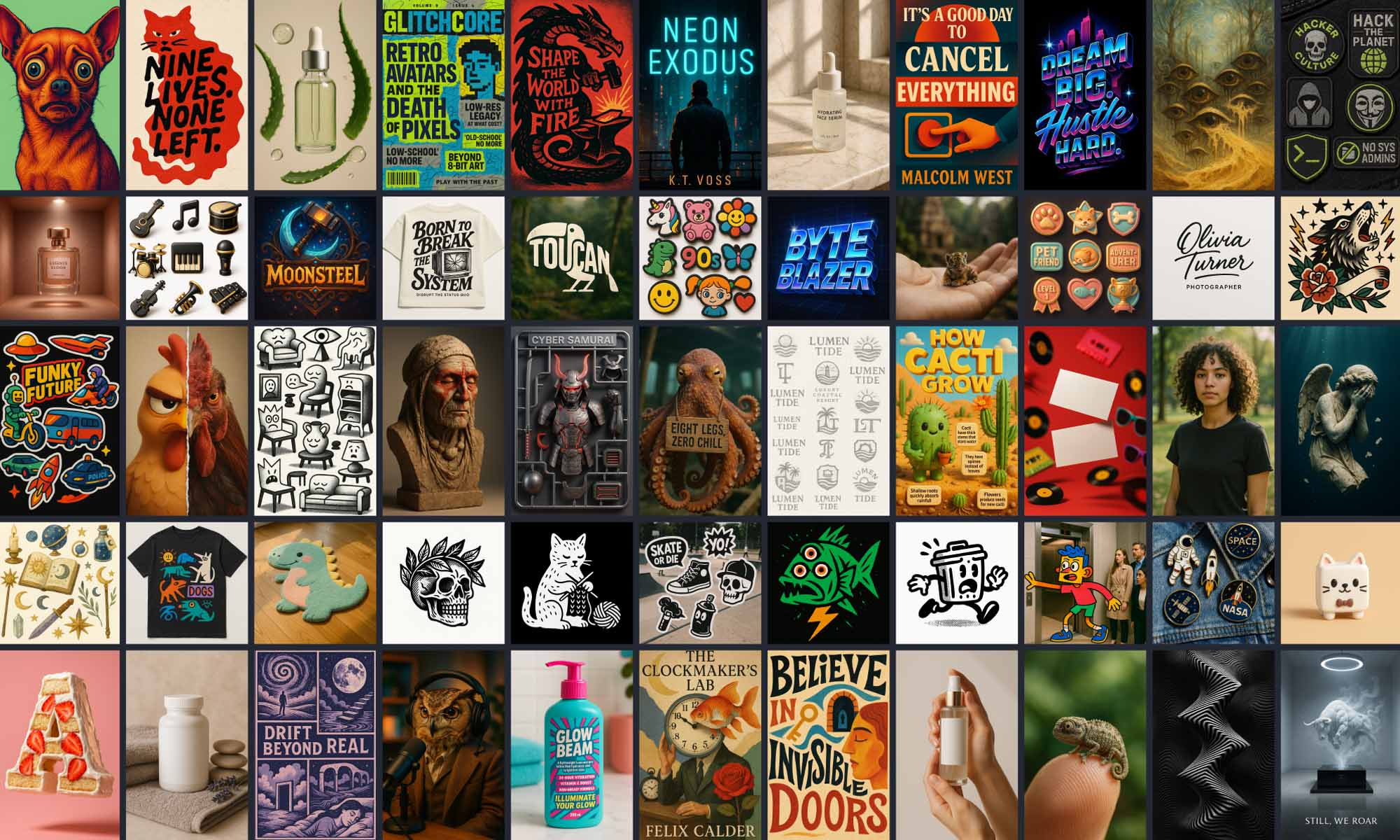
I built most of the prompts at PromptPlaza.store from real briefs I've handled as a working designer. The logo prompts, specifically, came from a period when I was running four or five brand identities a month and needed a faster way to concept without losing quality.
Here's a structure that works well for brand identity work: upload a reference image of the client's existing materials (a business card, letterhead, anything on brand). Then prompt: brand mark concept for the industry, geometric and minimal, match the weight and register of the reference, monochrome output with one accent element.
I ran this on a project last month. Generated 12 variations in under 20 minutes. Chose two to develop further. The client picked one on the first presentation.
That used to take me an entire afternoon, easily.
It's not perfect. You still need your eye, your judgment, and your ability to push the concept somewhere the model couldn't reach on its own. But the starting point is so much further along than before. And the time difference adds up fast when you're running multiple projects at once.
Mistakes That Kill Your Results
Most designers are prompting this wrong.
The biggest mistake: uploading too many references with no guidance. The model doesn't know which parts of each image to borrow. You get a visual smoothie instead of a direction. More references only help if you label them clearly.
Another one: using the reference as a shortcut instead of a creative tool. Uploading a competitor's logo and prompting "something like this but different" gets you something derivative. That's not ideation.
And don't skip the iteration pass. Generate four or five versions. Look at what the model keeps returning to across them. Sometimes the most interesting element shows up in what looks like a failed output. I've pulled color decisions and shape language from outputs I initially dismissed.
Specificity beats length, by the way. A 30-word prompt with one sharp reference outperforms a 200-word prompt with no reference every single time. (Yes, really.)

Start Here, Build from Here
Why does this matter enough to change how you work? Because the first half hour of any design project shapes everything that follows. If you start with weak concepts, you end with compromises. Reference-guided prompting gives you a stronger starting point, consistently.
Once you build the habit, the workflow shifts quickly. Concepts start looking more considered from the first output. Client revision rounds get shorter. You stop spending the first hour staring at a blank canvas.
But the prompts still matter. Not all prompts are built the same way. The ones at PromptPlaza.store were written by a working designer, tested on real client briefs, and structured to get something usable on the first or second pass: not the fifteenth. Each one has the layers built in already: subject, style direction, and output constraints.
If you're doing brand work, packaging, icons, or illustrations for clients, combining reference images with the right prompt structure is where the biggest time savings are. Give it a week. I think you'll stop going back to the old way.