ChatGPT Prompts for Sticker Pack Design (Etsy POD Guide)
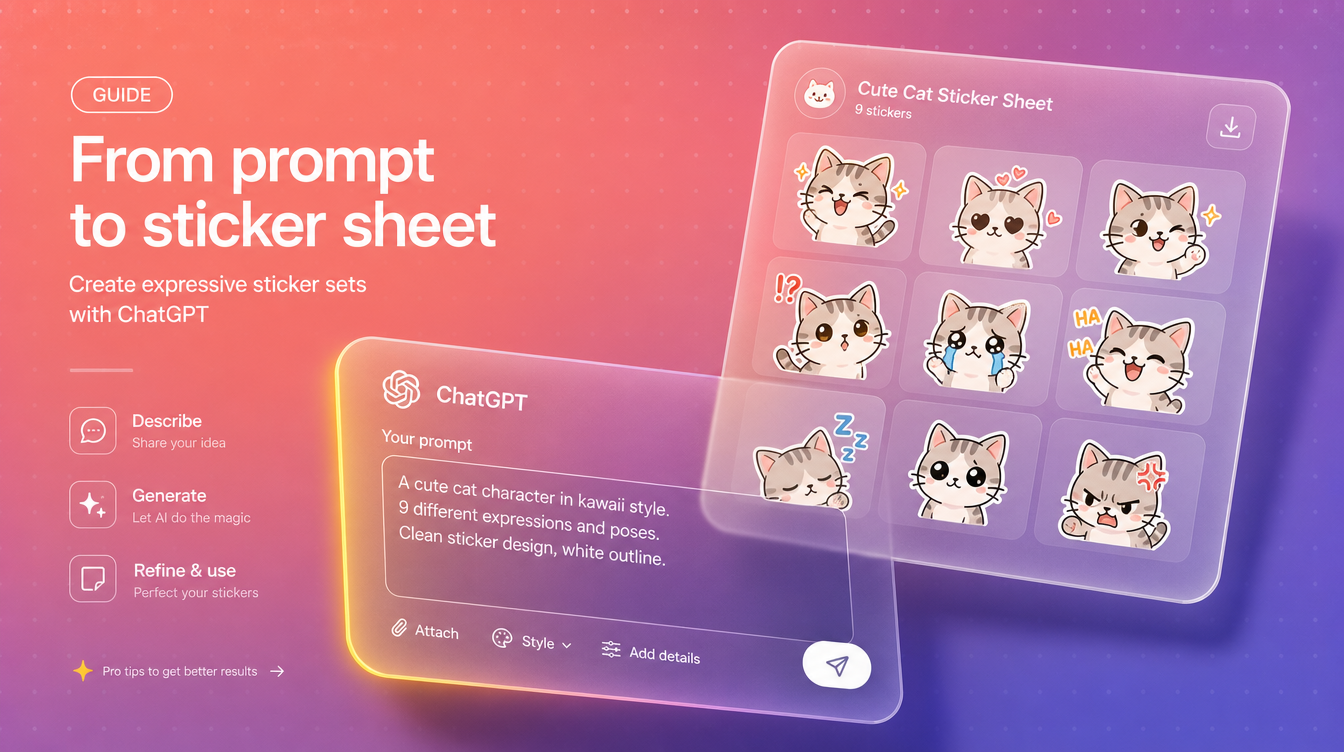
Most sticker design guides miss the point. They teach you how to make one sticker. But if you've ever browsed the top Etsy shops in the sticker category, you know the real money isn't in single designs. It's in packs. Cohesive, themed sticker sheets that feel like they belong together. The kind of shop where a buyer clicks "add to cart" on six listings in a row because everything looks like it came from the same world.
I've been creating sticker pack designs with ChatGPT's image generator for a while now, and the difference between a seller who gets traction and one who doesn't usually comes down to one thing: prompting for the whole pack, not just the individual design.
Here's exactly how I do it — and the prompts I use to make it work.
Why Packs Sell Better Than Single Stickers
Single stickers can work. But they're a harder sell. A buyer lands on your listing, likes it, and moves on. A pack? That's perceived value. That's "I'm getting nine designs for the price of one." And on Etsy, perceived value moves product.
There's also the SEO angle. A listing titled "Cute Food Sticker Sheet, 9 Designs, Kawaii Style" will outperform a single "avocado sticker" listing almost every time. More designs in one image means more visual interest in the thumbnail, which means better click-through rates.
But here's what most people get wrong when they try to make packs with AI: they generate each sticker separately and throw them together hoping it looks intentional. It doesn't. The proportions are off, the line weights don't match, the color palettes drift. You end up with something that looks assembled, not designed.
The fix is to prompt for the pack as a complete system from the start.
The 5-Part Sticker Prompt Formula
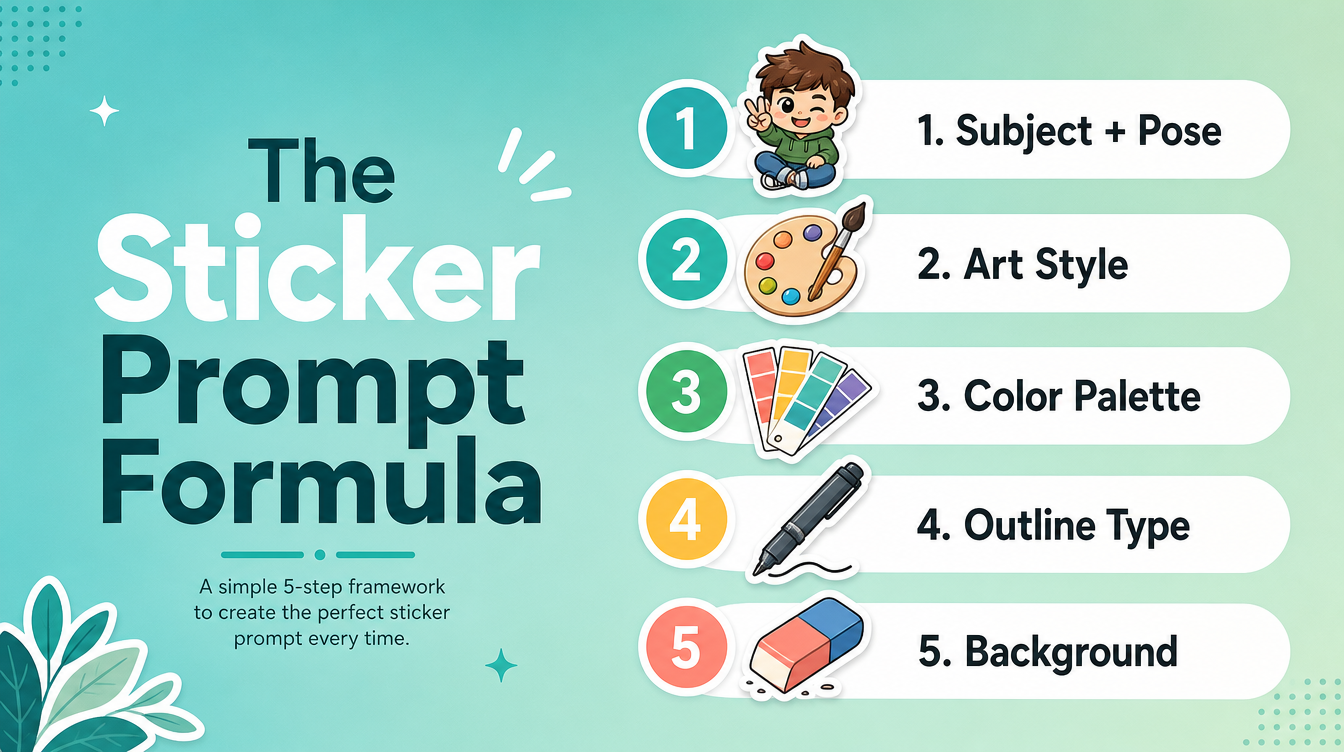
Every pack prompt I write follows the same five-part structure. Once you see it, you can't unsee it, and it makes every generation tighter.
1. Subject + count. Be specific about what characters or objects are in the pack, and how many. "A set of 9 kawaii food stickers" gives ChatGPT something concrete to work with.
2. Art style. Name it. "Chibi illustration," "flat vector," "hand-drawn sketch style," "line art." Don't leave this to interpretation.
3. Color palette. Either name specific colors or use a mood descriptor like "warm pastels" or "bold primaries." Palette consistency is what makes a sheet look cohesive.
4. Outline type. "Bold black outlines" is a sticker classic. "Thin clean lines" works for minimal styles. Specifying this keeps every element in the pack feeling like it came from the same hand.
5. Background treatment. For print-on-demand, you almost always want "white background per sticker" or "transparent background." This one trips people up more than anything else.
Put those five together and you get prompts that actually produce usable, consistent output. Here's a real one:
That's a prompt that generates a full product. Not a starting point, an actual usable sheet.
The Weak vs. Strong Prompt Test
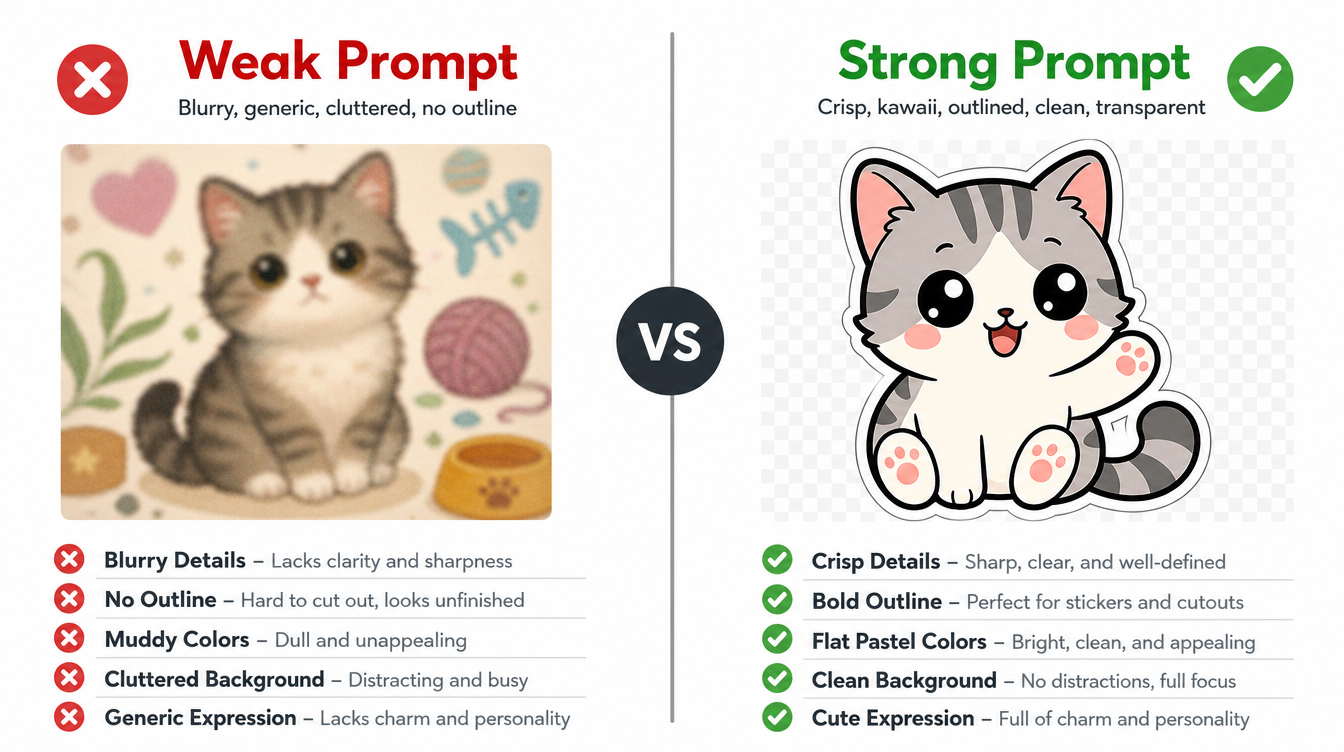
Look at these two prompts side by side.
Weak prompt: "Create cute stickers of animals."
Strong prompt: "A sticker sheet of 6 cartoon woodland animals (fox, deer, rabbit, owl, hedgehog, bear) in a chibi flat illustration style. Bold black outlines, 3px weight. Color palette: burnt orange, forest green, cream, and warm brown. Each animal is centered in its own circular sticker frame with a white background. Arranged in two rows of three. Transparent background for the sheet overall. No texture."
The first prompt produces random results. Different styles, inconsistent sizing, unpredictable backgrounds. Sometimes cute, sometimes not. You're at the mercy of whatever ChatGPT feels like generating.
The second prompt produces something you can sell. Every element is specified: count, style, colors, weight, frame type, layout, background. Nothing left to chance.
And yes, it takes about 45 more seconds to write a strong prompt. But it saves you 10 to 15 rounds of regeneration trying to get the first vague one to land anywhere useful. That's time you're not getting back.
Prompting for Cohesion: The Part Most People Skip
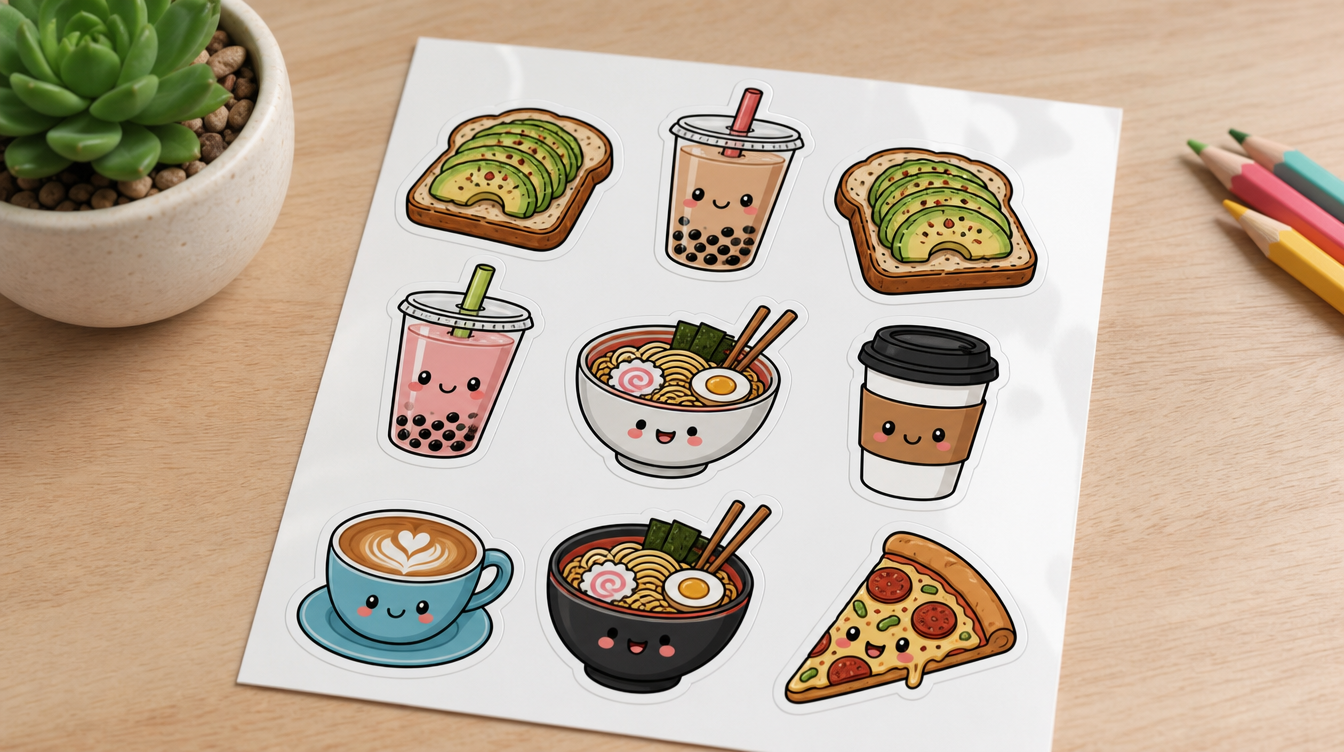
You can have great individual stickers and still have a bad pack. The thing that makes a sheet look professionally designed is cohesion, and that comes from being explicit about consistency in your prompt.
A few phrases that change results dramatically:
- "All characters same proportional size" prevents one element from dominating the sheet
- "Consistent line weight throughout" stops the pack from looking like five different artists made it
- "Limited palette of [X, Y, Z] colors only" keeps the mood tight across all designs
- "No gradients, no textures, flat colors only" is especially important for vinyl sticker printing
This is the detail that gets you repeat customers. Someone buys your coffee sticker pack and loves it. They come back for your food sticker pack. If both feel like they're from the same design universe, you've built a brand. That's what top Etsy sticker shops do, consciously or not.
For character-based packs, here's a prompt structure I've used in real client work for mascot sticker sets:
Choosing Your Niche Pack Theme
The best sticker packs solve a specific problem for a specific person. Not "cute animals," but "botanical plant lovers." Not "coffee," but "barista life." The more specific the niche, the easier it is to find buyers who feel like the pack was made exactly for them.
Some of the strongest-performing themes right now: cottage core aesthetics, mental health and self-care affirmations, celestial and witchy designs, hobby-specific packs (hiking, gaming, cooking), and seasonal sets. Food and drink is perennially strong if you commit to a specific angle rather than just "food."
And honestly? The prompt is the product. Once you have a strong pack prompt that generates clean output, you can remix it across dozens of niches without starting from scratch every time.
The Icons, Packs and Stickers collection at PromptPlaza is built specifically from real sticker and icon work. Prompts like Premium Popart Themed Stickers and Tiny Mascots With Action are already engineered for output that's close to print-ready, which means less cleanup after the fact.
Frequently Asked Questions
Can I sell sticker designs made with ChatGPT on Etsy?
Yes. Etsy requires sellers to disclose when AI tools are used in the creation process. As of 2026, this is a required disclosure at listing level. The designs are yours to sell. Just be transparent about how they were made.
What image size should I use for a ChatGPT sticker sheet?
ChatGPT outputs at a fixed resolution, so upscaling for print is often necessary. For sticker printing, the standard is 300 DPI at your intended print size. For digital downloads meant for home printing, 8.5 x 11 inches at 300 DPI is a reliable standard sheet size.
How do I get a transparent background from ChatGPT?
Include it explicitly in your prompt: "transparent background" or "PNG with no background." Results vary, especially on complex edges. Running the output through a background removal tool like Remove.bg or Adobe Express after generation is standard practice for clean results.
How many stickers should be in one pack?
The sweet spot for Etsy is usually 6, 9, or 12. Enough to fill a sticker sheet and justify the price, but not so many that the thumbnail looks cluttered. For digital download bundles, going larger (18 to 25) can work if the theme is strong and cohesive.
Build the System, Then Scale It
Here's the workflow I'd suggest for someone building a POD sticker shop from scratch: pick three niches, prompt five themes per niche, generate one sheet per theme. That's 15 listings in a weekend. Enough to start seeing what resonates without burning months on a single direction.
The prompts are the bottleneck. Once you have good ones, production is fast. That's exactly why having proven prompt templates matters more than having the perfect AI tool. The tools change. A well-structured prompt travels.
If you want to push into a different product line beyond flat sheets, the Sticker Collages On Real Photos prompt gives you a creative angle worth exploring. Stickers composited onto real backgrounds open up a whole other category of product photography and listing styles on Etsy.
The sticker market isn't slowing down. But the sellers winning right now aren't generating random cute things and hoping for the best. They have a system. This formula is a system. Start with one pack, nail the cohesion, then scale it.